
Spokane County | Population: ~230,800 | Spokane-Spokane Valley Metro
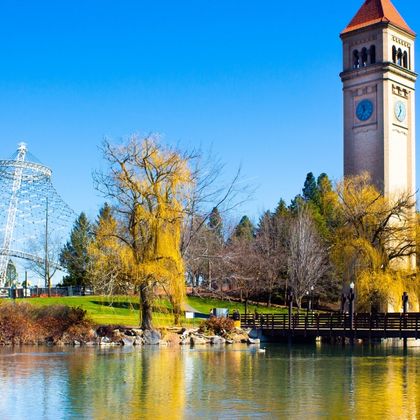
Eastern Washington’s largest city sits on the Spokane River and its namesake falls, combining a more affordable cost of living than the Puget Sound with a four-season climate, Gonzaga University, and a growing healthcare and education economy.
South Hill offers established, tree-lined streets with city views, Browne’s Addition is Spokane’s historic mansion district near downtown, Kendall Yards is a newer riverfront redevelopment, and the Garland District has a walkable, independent retail strip.
South Hill — Established, tree-lined streets with city and valley views.
Browne’s Addition — Spokane’s historic mansion district just west of downtown.
Kendall Yards — A newer riverfront redevelopment with shops and a farmers market.
Garland District — A walkable strip of independent shops, theaters, and diners.
Manito/Cannon Hill — Family neighborhoods near Manito Park’s gardens.
West Central — An in-town neighborhood undergoing active revitalization.
Hillyard — A historic railroad-era neighborhood in northeast Spokane.
Riverside/Downtown — Spokane’s core near Riverfront Park and the falls.
Indian Trail — Northwest Spokane homes near Riverside State Park.
Comstock — An established South Hill-adjacent neighborhood near Comstock Park.
- Riverfront Park and the Spokane River running through downtown
- Home to Gonzaga University and a growing healthcare/education sector
- Noticeably lower cost of living than Seattle or the Eastside
- Four distinct seasons with less rain than Western Washington
Spokane remains one of the more affordable metro markets in Washington, drawing buyers priced out of the Puget Sound region, with South Hill and Kendall Yards commanding a premium over other parts of the city.

Grades modeled on Niche.com’s Public Schools and Commute categories; Public Transit reflects the Commute grade, the closest available proxy.
Take the first step without commitment—just insights tailored to your unique needs.
